Ridge 5: A Modern Multi-Line Font with Geometric Flair
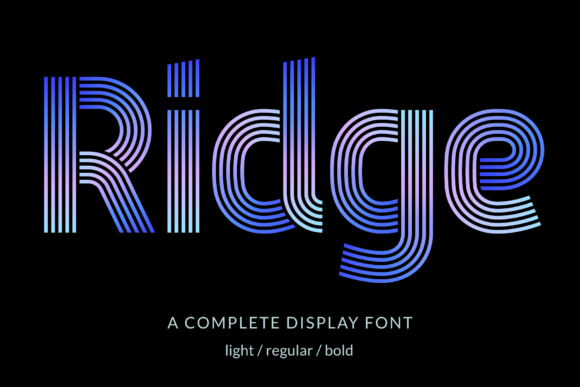
Ridge 5 is a contemporary typeface designed to meet the growing demand for versatile, multi-line fonts that go beyond traditional limitations. While many geometric sans-serif fonts focus primarily on uppercase characters or lack comprehensive language support, Ridge 5 offers a complete character set—including lowercase letters and European diacritics—making it a robust option for a wide range of design applications. Additionally, the font features alternate characters, giving designers more creative control and flexibility in their projects.
What Makes Ridge 5 Unique?
At its core, Ridge 5 is defined by its geometric shapes and natural flow. The clean, angular forms are balanced with subtle curves and spacing adjustments that enhance readability while maintaining an architectural aesthetic. This combination makes it visually striking without compromising functionality. The font's structure allows it to perform well in both digital and print formats, making it a solid choice for modern branding, editorial work, and web design.
The inclusion of lowercase characters is particularly noteworthy. Many multi-line or display fonts restrict themselves to uppercase only, limiting their usability in body text or mixed-case environments. Ridge 5 removes this constraint, enabling seamless integration into longer texts and diverse typographic scenarios. Furthermore, the font supports all major European languages through its full diacritic coverage, broadening its appeal to international audiences and multilingual content creators.
Why Consider Ridge 5?
Designers and developers may be drawn to Ridge 5 for several reasons:
- Comprehensive character support ensures it can be used across multiple languages and in various typographic settings.
- The alternate characters provide opportunities for personalization and differentiation in visual design.
- Its geometric style aligns with modern aesthetics, offering a fresh take on structured typography.
- The multi-line format adds a dynamic dimension to layouts, especially in posters, infographics, and packaging.
For professionals working on high-impact visuals such as logos, headlines, or product designs, Ridge 5’s bold presence and structural clarity can help convey a strong message. Its adaptability also means it can serve as a primary or secondary typeface in larger typographic systems.
Benefits and Tradeoffs
One of the key benefits of Ridge 5 is its ability to function effectively in both display and body text roles. Unlike some decorative fonts that struggle with legibility at smaller sizes, Ridge 5 maintains clarity due to its well-balanced proportions and open counters. This dual-purpose capability reduces the need to switch between multiple fonts within a project, streamlining the design process.
However, like any font, Ridge 5 has its tradeoffs. Its geometric nature may not suit every design context. In particular, if you're aiming for a more organic or handwritten feel, Ridge 5 might appear too rigid or mechanical. Similarly, its distinctive style could clash with softer or more traditional typefaces, so careful pairing is essential when using it alongside other fonts.
Another consideration is its visual weight. While this can be an advantage in creating contrast and hierarchy, it might overpower more delicate elements in minimalist or elegant compositions. Designers should assess how Ridge 5 interacts with background imagery, color schemes, and layout structures before committing to it as a primary typeface.
When to Use Ridge 5
Ridge 5 excels in contexts where a strong, modern visual identity is desired. It’s particularly effective in the following situations:
- Branding projects that require a bold, geometric look for logos, taglines, or promotional materials.
- Editorial design, especially in magazines, newspapers, or books where headings need to stand out without sacrificing readability.
- Web design for large-scale headings or UI elements where its clean lines and responsive structure perform well across devices.
- Infographics and data visualization where clear, structured typography enhances information hierarchy and user engagement.
In these use cases, the font’s versatility and attention to detail make it a valuable asset. Whether you're designing for print or digital media, Ridge 5 provides the tools needed to create impactful, cohesive visual narratives.
When Alternatives Might Be Better
While Ridge 5 is a powerful choice, it may not always be the best fit. For instance, if your project requires extensive use of serif styles or script fonts, Ridge 5’s geometric sans-serif approach might not align with the overall tone or theme. Similarly, in highly detailed or intricate designs, the font’s straightforward structure could appear too simple or lacking in character.
Additionally, consider the audience and purpose of your design. If you're targeting a conservative demographic or creating formal documents such as legal contracts or academic papers, Ridge 5 may not be the most appropriate choice. In such cases, a more conventional or professional typeface would likely be better suited to the environment.
Finally, if you're working on a project that demands a vast number of stylistic variations—such as custom lettering or experimental typography—you may find other fonts with broader glyph sets or more unique alternates to be a better match. Ridge 5 offers thoughtful alternatives, but it’s not overly complex, which could be a limitation in some niche design applications.
Practical Tips for Choosing Ridge 5
To determine whether Ridge 5 aligns with your goals, start by evaluating the needs of your specific project. Ask yourself:
- Do I require a font that works in both uppercase and lowercase?
- Is my design leaning toward a modern, geometric aesthetic?
- Will I need support for European languages or special characters?
- Am I looking for a font that offers some stylistic variation without being overwhelming?
If your answers lean toward “yes,” then Ridge 5 could be an excellent addition to your toolkit. Test it in real-world conditions by applying it to sample layouts or mockups. Observe how it performs at different sizes, weights, and line heights. Pay attention to its behavior in extended reading passages and how it complements other design elements.
Also, consider the technical aspects. Ensure that Ridge 5 is available in the correct file format for your platform (e.g., WOFF, TTF, or OTF). Some foundries offer additional variants or weights that may expand its usefulness. If you’re integrating it into a website, verify its compatibility with web standards and how it renders across browsers and devices.
Final Thoughts
Ridge 5 is a carefully crafted typeface that bridges the gap between geometric formality and practical usability. Its multi-line structure, combined with full lowercase and diacritic support, makes it a rare and valuable tool in today’s design landscape. While it won’t be suitable for every project, it shines in modern, dynamic applications where visual impact and typographic clarity are equally important.
As with any design decision, the key is to evaluate how well Ridge 5 fits into your specific context. Consider the tone, purpose, and technical requirements of your work before selecting it as your primary or supporting font. When used thoughtfully, Ridge 5 can elevate your designs with its clean geometry and expressive potential.