Bold Outline: A Font That Balances Style and Readability
Typography plays a vital role in design, influencing not only aesthetics but also communication and user experience. Choosing the right font can elevate a project from ordinary to extraordinary, especially when it comes to display fonts that are used for headlines, logos, or attention-grabbing text. One such font is Bold Outline, an assertive and adaptable typeface that combines visual impact with clarity. Whether you're working on digital content, print materials, or creative projects like greeting cards, Bold Outline offers a unique blend of friendliness and professionalism.
Understanding Display Fonts and Their Role
Display fonts are specifically designed for use in larger sizes where they serve as focal points rather than body text. These fonts often feature exaggerated characteristics such as bold weights, unusual spacing, or distinctive letterforms to stand out. While many display fonts prioritize style over readability, Bold Outline manages to achieve both, making it a versatile choice across various applications.
Its adaptability means it can be utilized in multiple contexts—from signage and presentations to web headers and branding assets—without compromising legibility. This balance makes it particularly valuable for creators who need a font that looks great while still being easy to read at different sizes and distances.
Key Characteristics of Bold Outline
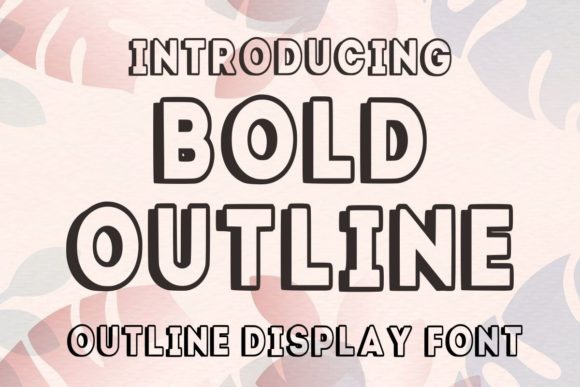
- Strong Visual Presence: The name "Bold Outline" hints at its defining trait: a robust and eye-catching appearance. Each character is outlined with precision, giving it a modern and confident look.
- Adaptable Design: Despite its bold nature, the font maintains a level of flexibility that allows it to fit into both contemporary and classic design schemes.
- High Readability: Unlike some other bold or outlined fonts that may sacrifice clarity for style, Bold Outline retains excellent readability even in smaller sizes.
- Impeccable Friendliness: The overall tone of the font is warm and approachable, which is rare for a display font with such a strong structure. It’s this friendliness that makes it ideal for greeting cards, social media posts, and marketing materials aimed at a broad audience.
Why Choose Bold Outline for Your Projects?
Designers and creators often seek fonts that can perform well in diverse environments. Bold Outline meets these demands by offering a consistent visual language across different mediums. Its bold yet friendly appearance helps convey messages with authority while maintaining a welcoming vibe. This dual characteristic is especially beneficial in branding, where a company might want to project confidence without appearing too rigid or unapproachable.
Advantages Across Different Industries
Professionals in education, business, and the arts have all found value in using Bold Outline. Educators might use it in presentations to highlight key concepts, while business owners could integrate it into their website headers or promotional banners to grab attention. In the realm of digital design, the font's versatility ensures it can complement both minimalist and maximalist styles effectively.
- Marketing and Advertising: With its striking appearance, Bold Outline can help brand names or slogans stand out in crowded spaces, whether online or in print.
- Graphic Design: Graphic designers appreciate how easily the font integrates into compositions without overpowering other elements. It adds emphasis without cluttering the layout.
- Web Development: Web developers benefit from the font's clean lines and scalability, ensuring that it renders well across devices and screen resolutions.
- Crafting and DIY Projects: Hobbyists enjoy using Bold Outline in crafts, scrapbooking, and greeting cards due to its ability to add personality without sacrificing legibility.
Use Cases That Highlight Its Strengths
Consider a local bakery looking to update its logo. A traditional serif font might feel outdated, while a script font could be difficult to read. Bold Outline offers a compelling alternative—it exudes strength and clarity, aligning perfectly with a brand image that is both trustworthy and inviting.
In another example, a university professor preparing lecture slides may find that standard sans-serif fonts lack the necessary emphasis for key takeaways. By incorporating Bold Outline for section headings, the professor can guide the audience more effectively, drawing attention to important ideas without overwhelming the page with heavy typography.
Practical Considerations When Using Bold Outline
While Bold Outline is highly adaptable, there are several considerations to keep in mind to ensure optimal results. First, understanding the appropriate use of contrast is essential. Because it’s a bold font, pairing it with lighter or more neutral fonts in body text will create a better visual hierarchy and prevent text fatigue.
Secondly, color choices matter. Outlined fonts tend to work best with solid fills or minimal gradients. Experimenting with subtle shading or stroke effects can enhance its presence, but overdoing it may lead to a loss of clarity.
Optimizing for Digital and Print Media
When used in digital formats such as websites or mobile apps, Bold Outline performs admirably at high resolutions. However, when designing for print, it's crucial to consider ink bleed and paper quality. An outlined font can sometimes lose definition in low-quality printing conditions, so always preview your designs before final output.
For digital displays, the font's boldness helps it cut through the noise of modern interfaces. On websites, using it for headlines or call-to-action buttons can improve engagement by making those sections more prominent. In app design, it can guide users' attention to important features or alerts.
Comparing Bold Outline with Other Display Fonts
There are countless display fonts available today, each with its own strengths and weaknesses. Some fonts lean heavily toward artistic expression, making them unsuitable for anything beyond decorative purposes. Others may be overly formal or stiff, limiting their appeal in casual or consumer-facing contexts. Bold Outline stands apart because it balances formality and playfulness, making it suitable for both professional and personal projects.
Compared to block-letter fonts, which can appear aggressive or impersonal, Bold Outline has a softer edge that invites interaction. Similarly, when stacked against cursive or script fonts, it offers a more structured and reliable option for conveying information clearly.
Real-World Applications and Observations
Many educators have adopted Bold Outline for classroom posters and interactive whiteboard presentations. Its clear structure and friendly demeanor make it accessible to students of all ages, supporting visual learning without distraction. Similarly, researchers have used it in academic infographics to highlight findings or emphasize particular data points.
Business owners often choose Bold Outline for their storefront signs or packaging. For instance, a boutique clothing store might use it in window displays to attract passersby, while a tech startup could apply it to product demos to underscore innovation and clarity. The font’s ability to adapt to different scales and mediums makes it a favorite among professionals who require consistency across their branding efforts.
How to Integrate Bold Outline Into Your Workflow
Integrating Bold Outline into your design workflow is straightforward. Most graphic design tools such as Adobe Illustrator, Photoshop, Canva, and Figma support custom font installations. Once installed, it can be applied to any project requiring bold, readable text.
For web developers, embedding Bold Outline via CSS or Google Fonts is a common practice. Here's a simple code snippet to include it in a webpage:
This accessibility ensures that even non-designers can leverage its benefits without needing advanced technical knowledge.
Pairing Tips for Maximum Impact
To maximize the effectiveness of Bold Outline, consider pairing it with complementary fonts. A popular combination involves using it alongside a clean, modern sans-serif like Montserrat or Lato for body text. This creates a balanced composition that draws attention where needed while maintaining a professional tone throughout the document.
Alternatively, for more expressive layouts, pairing it with a handwritten or script font can introduce a sense of warmth and creativity. Just be cautious not to overuse outlined or script fonts together, as this can reduce readability and confuse the viewer.
Trends and Future Relevance of Bold Outline
As design trends evolve, the demand for fonts that offer both style and substance remains high. Bold Outline fits neatly into current trends favoring bold, modern typography that doesn’t compromise on legibility. Its clean outlines and friendly curves align with the growing preference for fonts that communicate energy and positivity.
Looking ahead, we can expect to see continued interest in fonts that support multilingual and international projects. Fortunately, Bold Outline is already equipped with a wide range of glyphs and characters, making it suitable for global audiences. As more businesses expand their reach online, having a font that works well across languages and cultures becomes increasingly valuable.
Accessibility and Bold Outline
Accessibility is a critical factor in font selection, especially for public-facing content. Bold Outline scores well in this area thanks to its high contrast and clear letterforms. It’s particularly useful for individuals with dyslexia or visual impairments when paired with sufficient background contrast and proper sizing.
Designers aiming to meet WCAG (Web Content Accessibility Guidelines) should test the font at different sizes and on various screens to ensure it meets AA or AAA contrast standards. In most cases, Bold Outline provides a strong foundation for accessible design when implemented thoughtfully.
Final Thoughts on Typography Choices
Selecting the right font is about more than just visual appeal—it’s about effective communication. Bold Outline exemplifies how a display font can deliver both aesthetic value and practical functionality. Its ability to maintain readability while asserting a strong visual identity makes it a standout choice for anyone involved in design, marketing, education, or creative content production.
Whether you're a seasoned designer or someone new to typography, experimenting with Bold Outline can open up new possibilities for your projects. Its widespread usability and friendly demeanor mean it can be a go-to font in many scenarios, helping you express your message with confidence and clarity.